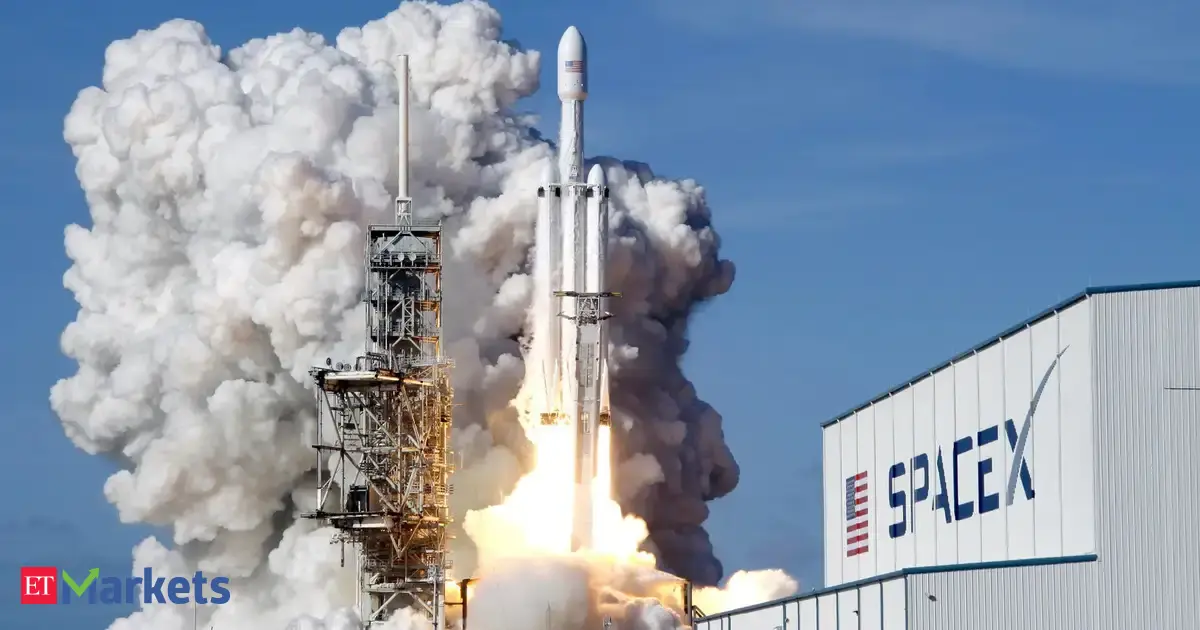
The $600B question: Why SpaceX’s crash is a
stress test for the entire ecosystem
Elon Musk’s net worth just halved in weeks. But the real story isn’t about one man’s fortune. It’s about the fragility of private-market valuations, the concentration risk in mega-funds, and the downstream effects on founders and LPs. When a $200B+ private company loses nearly half its value overnight, the tremors ripple across the startup ecosystem. (The Times of India, 2026)
The crash exposes three uncomfortable truths:
- Private markets aren’t immune to public-market volatility. SpaceX’s shares, once priced as if they were a public stock, are now behaving like a distressed asset.
- Concentration risk is existential. Funds with heavy exposure to SpaceX — directly or via secondary markets — face immediate markdowns.
- Founders are caught in the crossfire. Down rounds, delayed IPOs, and tighter term sheets loom as LPs reassess risk.
For VCs and LPs, this isn’t just a headline. It’s a wake-up call.
The mechanics of the crash: What actually happened
to SpaceX?
SpaceX’s shares peaked at $202 in June 2026, valuing the company at roughly $300B. By August, they’d cratered to $109, erasing $150B+ in implied value. The drop wasn’t driven by a single event but by a cascade of signals:
- Profitability concerns. SpaceX’s Starlink unit, once the growth engine, faced margin compression as competition in satellite broadband intensified. Analysts questioned whether the unit could sustain the aggressive expansion needed to justify its $150B+ valuation.
- Regulatory headwinds. The FCC and international bodies tightened rules on satellite launches and spectrum allocation, increasing compliance costs and slowing deployment timelines.
- Macro pressures. Rising interest rates made high-valuation private assets less attractive, while a broader sell-off in tech stocks spilled into private markets via secondary transactions.
- Liquidity crunch. SpaceX had been raising capital at premiums, but the crash forced existing investors to mark down holdings, creating a feedback loop of markdowns and redemptions.
The result? A 46% haircut in weeks. For context, that’s larger than the drawdowns seen in public tech stocks during the 2022 bear market.
Why this matters for venture funds: The concentration
risk paradox
Most VC funds don’t hold SpaceX directly, but the indirect exposure is significant. Here’s how:
Secondary market exposure
- Funds like Sequoia Capital, Andreessen Horowitz, and Tiger Global have held SpaceX shares in their portfolios via secondary purchases or direct investments.
- According to PitchBook data, secondary funds with exposure to SpaceX (e.g., $100M+ allocations) could see markdowns of 30-50% on their holdings.
- The ripple effect: LPs in these funds may demand faster liquidity, forcing managers to sell other assets at a discount to meet capital calls.
Downstream effects on portfolio companies
- SpaceX’s suppliers and partners — many of them venture-backed — now face tighter financing terms. For example, satellite component manufacturers like Astra Space (OTC: ASTR) saw their stock drop 22% in the week following the crash.
- Founders in adjacent sectors (e.g., aerospace, AI-driven logistics) report VCs are pausing term sheets, citing "valuation reset" as a primary concern.
The IPO window slams shut
- SpaceX’s crash signals the end of the "private IPO" era for mega-rounds. Founders aiming for $10B+ valuations will now face greater scrutiny from public-market investors.
- Example: The recent collapse of a $12B valuation round for a space-tech startup was directly attributed to SpaceX’s markdowns.
Key takeaway: If a company as dominant as SpaceX can lose half its value in weeks, no private-market asset is safe from repricing.
What LPs should do next: Stress-testing the portfolio
For limited partners, the SpaceX crash is a case study in risk management. Here’s how to apply the lessons:
Audit secondary exposures
- Review fund holdings for indirect SpaceX exposure via secondary funds, co-investments, or direct stakes.
- Use tools like Carta or Capshare to model markdown scenarios (e.g., 30%, 50%, 70% haircuts).
- Pressure-test LPA terms: Are there clawback provisions or side letters that mitigate markdown risks?
Reassess concentration limits
- Most LPs cap allocations to any single private asset at 5-10%. SpaceX’s crash suggests revisiting these limits.
- Consider diversifying into smaller, less correlated private assets (e.g., seed-stage startups, niche industrials).
Prepare for markdown negotiations
- Expect pushback from GPs on NAV calculations. Demand transparency on valuation methodologies.
- For funds with heavy secondary exposure, request quarterly markdown reports tied to public comparables (e.g., satellite broadband peers like ViaSat or OneWeb).
Shift capital to resilient sectors
- Prioritize funds with exposure to sectors less sensitive to macro shocks:
- Climate tech (e.g., carbon capture, fusion energy).
- Healthcare infrastructure (e.g., biomanufacturing, digital therapeutics).
- Enterprise AI tools with clear ROI metrics.
Rule of thumb: If a fund’s top 3 holdings account for >40% of its NAV, it’s time to ask hard questions.
For founders: How to navigate the new normal
The SpaceX crash isn’t just a valuation reset — it’s a market psychology reset. Founders must adapt to a world where:
- Valuations are no longer sticky. Even